

Sustainable growth in student advising isn’t built on larger budgets or endless tech stacks. It comes from optimizing the advising role’s architecture, freeing your team to focus on high-value human connection.
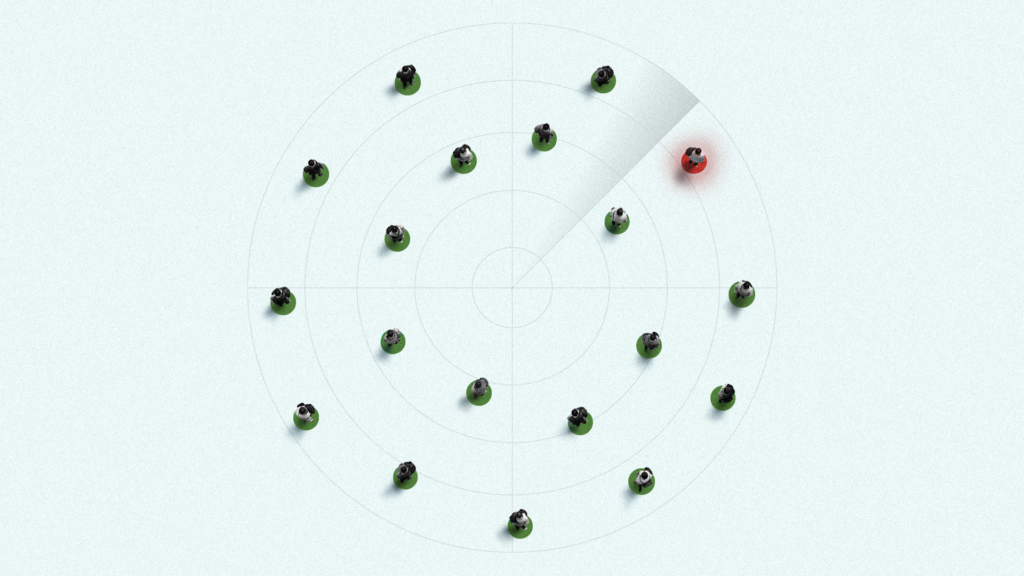
Georgia State University is the most documented example of what that strategy can produce. GSU had one advisor for every 1,000 students when it launched its GPS Advising system in 2012. Rather than simply hiring more advisors, GSU built a system that tracks 800 risk factors across its entire undergraduate population daily, alerting advisors when a student needs intervention and expecting outreach within 48 hours. The technology told advisors exactly who to call and when, without replacing them.
The results are among the most cited in higher education. Freshman fall-to-spring retention rates increased by 5 percentage points, and four-year graduation rates improved by 7 percentage points over the same period. The six-year graduation rate rose from 48% to 55% between 2008 and 2018. The GPS system generated more than 55,000 individual advisor-student meetings in a single year. Those conversations happened because technology surfaced the need. Students didn’t have to find their way in on their own.
What GSU built goes beyond a smarter alert system: a different model of advising, where technology handles identification and advisors handle what comes next.
Where Advisor Time Goes
In most institutions, advisors spend the bulk of their day away from high-impact student work. Hours disappear into scheduling, degree audits, and a steady stream of routine inquiries. The mismatch is structural: highly trained staff doing work that doesn’t require their judgment, while the conversations that actually move students forward get squeezed into whatever time remains.
NACADA data show advisor-to-student ratios frequently exceed 300:1, with community colleges averaging 441:1. At that scale, weeks can pass between identifying a student’s need and responding to it. Attrition lives in that gap.
What Changes When Systems Are Designed to Work
Institutions seeing the strongest outcomes redesign advising systems so that technology absorbs the high-volume, rule-based work. Automated tools handle routine inquiries and real-time degree tracking. No signal gets lost during the handoff because alerts are generated and outreach coordinated in tandem. Scheduling and documentation become streamlined enough that advisors stop managing logistics and start managing relationships.
Technology deployed on its own tends to generate more alerts than any advisor has time to act on. Alerts only turn into outreach when institutions redesign advisor roles alongside the new systems. The colleges seeing results build both at once.
That redesign often meets resistance before it produces results. Advisors asked to hand off routine tasks reasonably wonder whether efficiency is a step toward eliminating their role. Community College of Aurora administrators encountered this directly when they shifted registration work to dedicated registration staff. They addressed it head-on, showing advisors what the freed-up time bought them: more capacity for the relationship-building work technology can’t replicate. Success requires embedding those conversations directly into the change management strategy.
The result is higher-quality engagement delivered at scale, without the staffing cuts advisors feared and without needing proportional increases to keep up as enrollment grows.
What Cannot Be Automated
The most important advising moments are personal and contextual. A student navigating financial instability needs more than information. A first-generation student deciding whether to stay enrolled often needs guidance that accounts for family pressure, not just academic options. An advisor’s help matters most when life disrupts a plan, guiding the student to adapt without losing momentum.
These interactions require judgment that can’t be systematized. EDUCAUSE identified “The Human Edge of AI” as a top priority for 2026, the first time a top-10 priority has explicitly focused on preserving human roles within AI-driven systems. In advising, technology creates the conditions for meaningful engagement. Advisors deliver it.
What the Strongest Institutions Have in Common
The strongest advising models share a common structure, though they don’t all look alike. Enrollment and advising draw on the same data as academic affairs rather than working from siloed systems. The advisor role is defined around high-impact work, with transactional tasks deliberately excluded. Response speed is treated as a design variable, built into workflow rather than left to individual initiative. And detection and intervention are understood as separate functions. Early alert systems identify risk. Advising systems ensure someone acts on it.
Community College of Aurora shows what this looks like in practice at a different scale than GSU. Advisors there are assigned caseloads by pathway expertise, but also by student risk profile, so no single advisor absorbs a disproportionate share of high-need students. The technology doesn’t just flag who needs help. It shapes how the workload gets distributed across the team, so the advisors with the bandwidth for complex cases are the ones who get them.
The Systems Question
Advising is where institutional strategy becomes student experience.
Scaling that experience means deciding how institutions structure the relationship between automation and headcount, not simply adding more of either. The institutions getting this right are expanding what advisors do by creating the capacity for meaningful, timely human connection.
That capacity matters more as enrollment bases shrink and every retained student carries more institutional weight. It determines whether persistence and completion rates move. The true differentiator in these models lies beyond technology features or staff headcount—it is how the institution structures itself around both.
Designing Advising Systems That Scale
Noodle works with institutions to structure the relationship between technology and advisor capacity, not just deploying alerts but redesigning workflows so advisors act on them. If your institution is navigating advisor caseload design, early alert infrastructure, or how to free advisor time for higher-impact student engagement, we’d welcome the conversation.
Let’s talk.