


Many institutions invested heavily in digital tools over the past decade, yet few would say their efforts have fully transformed the student experience. Tools such as learning management systems, customer relationship management systems, analytics platforms, and advising technologies were marketed as ways to improve efficiency and provide faculty greater insight into learner behavior.
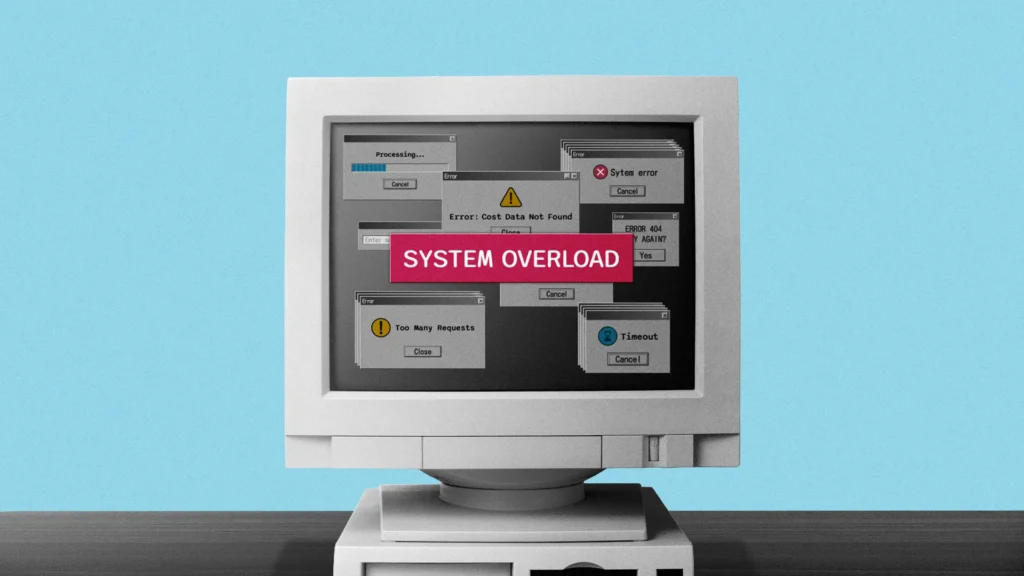
And yet, despite the abundance of digital tools, students still experience higher education as fragmented and inconsistent. The issue isn’t that the tools don’t work; it’s that they rarely work together in ways that align with how students navigate their academic journeys.
Learners experience their engagements with universities as a connected journey. They build a profile of a university across admissions, enrollment, student support, and learning experiences without delineating administrative distinctions between offices.
Those paths are rarely linear or identical. Learners don’t differentiate between “online” and “on campus” in the dichotomous ways universities do; instead, they move fluidly between modalities, touchpoints, and services, even within the same term. Within institutions, however, silos remain deeply embedded, especially in how universities are organized and how they deploy tech.
These silos often reflect organizational structures and system ownership rather than learner needs. Enrollment, advising, career services, wellness, and learning frequently operate as distinct units with their own tools, data, and success measures. Modality-based distinctions add complexity, shaping staffing models, support structures, and data architecture in ways learners never see but routinely feel.
In practice, this results in a fragmented experience for learners, with advising, outreach, and support shaped by internal structures and system boundaries rather than learners’ immediate needs. These artificial boundaries may help institutions manage internal complexity, but they create unnecessary friction for learners.
Data Isn’t a Silver Bullet
Collecting more data doesn’t automatically improve learner experiences. Leaders push to “use data better” and “adopt AI,” assuming that more data yields more insight and better outcomes. However, many institutions lack a clear understanding of how their investments in data collection and analytics translate into meaningful improvements in learner experience. Data aggregation without a vision creates noise, not insight.
The ultimate goal should be a data-empowered institution focused on alignment, governance, and integration across campus, not tech for tech’s sake. Connecting data across the student experience enables universities to understand the nuances of their learner population—in aggregate and as individuals—to deliver meaningful and impactful experiences.
When data isn’t organized around the learner journey and institutional goals, staff often struggle to know what to trust or how to act. Signals get ignored because they lack context. Dashboards become superfluous when they only tell part of the story. Data fails to support action. It either overwhelms teams or sidelines professional judgment entirely.
But it’s precisely the human voices and human action in moments that matter that improve the learner experience.
Learners Don’t Create Silos. Universities Do.
Learners expect flexibility, equity, and consistency across learning environments. They don’t differentiate between the systems or departments behind the scenes; they assume institutions understand who they are and can adapt to their evolving needs.
But when data is siloed and support teams see only fragments of a learner’s journey, learners are left to connect the dots themselves. The breakdown in continuity may seem minor at first, but its effects add up. Missed handoffs mean delayed outreach. Conflicting communications, often delivered across different channels and formats, signal that no one has the full picture.
Over time, learners stop expecting the institution to meet their needs. Some try to navigate the gaps on their own; others become overwhelmed and disengage. What looks like internal operational friction manifests externally as confusion and lost connection.
What Leading Institutions Do Differently
Some institutions are bridging the gap by rethinking, not just expanding, their technology. Instead of piling new tools onto outdated systems, they’re integrating data from SIS, LMS, CRM, advising, and support platforms into a unified view of each learner.
In this approach, technology enables stronger relationships. Staff gain role-appropriate insights, allowing them to offer holistic support without compromising sensitive information. The result: a clearer picture of the learner’s entire journey, not just isolated touchpoints.
Two institutions recently featured in Higher Ed Drive took a strategic step away from treating enrollment, advising, and academic data as separate silos. Instead, they focused on improving information flow across teams that support learners throughout their journey.
By connecting these signals, staff could identify emerging needs earlier and coordinate outreach more effectively. Shared visibility into the learner experience resulted in conversations that felt informed and timely, rather than reactive or disconnected.
The result: fewer missed handoffs, clearer ownership of follow-up, and more personalized support that improved student retention.
Success means empowering staff to show up for learners with the right context at the right time, and then adapting as needs evolve.
From Analytics to Action
Learner experience improves when insights trigger timely outreach, guidance or intervention. Only 36% of higher education instructors report that digital learning has led to student success, underscoring the limits of technology without alignment, training, and support.
Human judgment adds what algorithms can’t: context about a learner’s circumstances, nuance about what support is appropriate, timing that respects where they are in their journey, and care that turns insight into trust.
Many institutions already recognize the value of human connection. Perhaps that’s why technology decisions are under growing scrutiny. The challenge is ensuring technology supports professional judgment and care naturally and empathetically as institutions scale their tech usage.
What “Better” Looks Like for University Leaders
Reframing success requires clarity. Better doesn’t mean more tools. It looks like:
- A connected learner journey across modalities
- A unified learner profile that enables context-aware support
- Technology that makes staff more visible and accessible to learners, not a barrier between them
- Data that prompts action and drives retention
When universities intentionally design infrastructure with experience in mind, efficiency and empathy reinforce one another. Improving the learner experience doesn’t require chasing the latest tool. It requires connecting data, systems, and human support so staff can engage more personally and proactively with learners at the moments that matter most.
Ready to move from fragmented experiences to meaningful connections? Start with a conversation. Noodle works alongside university leaders to identify where learner journeys break down, align data and systems around real moments of need, and equip staff with the context they need to engage more effectively. Connect with us to explore what better could look like for your institution.
Let’s Talk